




Large Language Models: a Game Changer
Artificial intelligence // At the beginning of May, Geoffrey Hinton was the latest veteran AI researcher to warn against the potential of “new” AI. But it was already clear that a short-term hype cycle doesn’t adequately explain current developments.
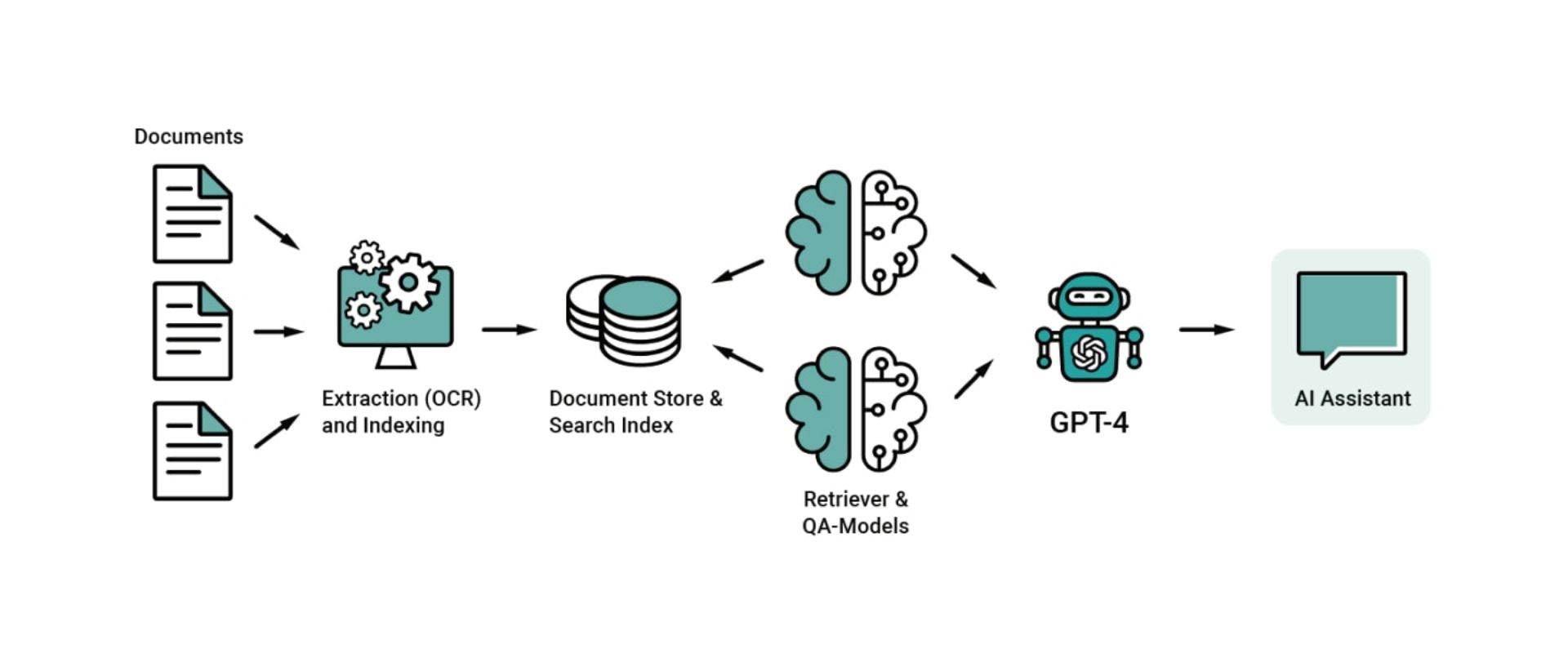
What happened? For a few years now, it has been clear that human brilliance isn’t the best basis for improving AI. What makes a difference is massive data scaling, more computing power, and larger models. Richard S. Sutton shared this insight in 2019 in his high-profile essay The Bitter Lesson. And this viewpoint proved true in 2022 and 2023. Using enormous computing power, large quantities of data, and flawless engineering, OpenAI created GPT-3.5/4, a model that astounded people around the world. Accessible to everyone as ChatGPT, this generalized model makes work easier in many different professions.
And this is just the start. It’s clear that the next generation of models will be able to process more than text: images, camera feeds, audio files, and even robot sensor information. The big players in the field of AI are following suit with similar models. Google made its PaLM 2 model available via API at the end of May. And there are already open source models that perform at a similar level to GPT-4. The development of these large language models (LLMs) like GPT-4 isn’t just exciting for end users. These models are also changing day-to-day work for the machine learning engineers at ti&m. While projects in machine learning and AI have often been demanding and required a lot of effort, LLMs open up a completely new approach. Take one example: a customer in the insurance industry wants to build software that automatically directs incoming claims to the correct department. Three years ago, this would have been an extensive project that included:
- Procuring or generating sufficient data for training and testing an ML model.
- Training and testing various model architectures.
- Integrating the trained model in a conventional piece of software.
In many cases, this process required multiple iterations to achieve the necessary quality. It was hard work, but it was the only way to solve complex problems using AI. The arrival of LLMs is creating new options for projects like these. Rather than needing to collect data and train models, it is now often enough to ask the right questions with the help of prompt engineering in a zeroshot learning setup. Let’s look at two project examples:
Project 1 “Analyzing customer communication with LLMs”
Almost every larger retail company collects large volumes of data via customer communication such as phone calls, emails, and chats. Analyzing these data can deliver clear added value: Are customers satisfied with the products? If not: Why is this? What are customers’ key needs right now? How many conversations address the topic of XY and how often?
These days, it takes little effort to answer these questions and others. The first step is transcribing phone conversations. AI models that (more or less reliably) translate speech into text have been around for many years. But for niche languages such as Swiss German, the quality was often inadequate or needed a lot of work. With Modern AI models such as Whisper (open source; developed by OpenAI) you can now transcribe conversations in Swiss German into written German text of a very high quality. Even relatively difficult dialects are easily possible without any specific training. Once the oral communication has been put into writing, analyzing it is very easy with GPT-4. But the right prompts have to be developed depending on each use case. When it comes to a straightforward summary of a conversation, a simple prompt suffices, such as “Please summarize the following conversation in three brief, concise sentences.” The prompts become somewhat longer for other use cases. Additional prompt engineering tricks also make it possible to ensure that the model’s answers are a true representation and as error-free as possible.


Special, Digital Banking
Countering uncertainties with domestic software development
Onshoring // No digitalization without foreign suppliers: From skilled workers, to hardware such as mobile phone antennas, to end devices, Switzerland is dependent on other countries. In view of the current political and economic situation, Switzerland would do well not to outsource digitalization projects and software development to foreign countries but to work with Swiss partners.
Magdalena Koj - Apr 20, 2023
Special, Digital Banking
The holistic advisory solution from ti&m
ti&m advisory suite // There are several advisory solutions aimed at specific financial concerns. With the ti&m advisory suite, ti&m and twentysecond have developed an advisory solution for retail banks that bundles all these concerns in one central platform. This allows advisors to holistically advise their customers, while offering an attractive customer journey.
- Apr 4, 2023
Special, Swiss-Software-AI
The path to a sovereign and future-proof data platform starts with open source
Silvan Meier - Sep 22, 2025